Baby Foot Print with Heart
As a designer and embroidery product reviewer, I often find myself evaluating designs that promise to elevate a project. Baby Foot Print with Heart is one such design that caught my attention for its sentimental appeal and visual potential. But before I recommend it for real use, I need to understand how it performs in practical situations.
The First Impression
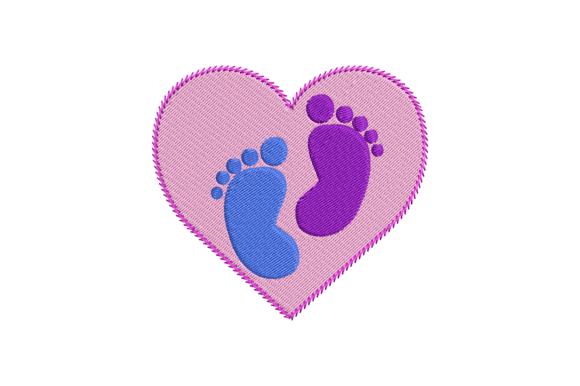
From the moment I saw Baby Foot Print with Heart, it felt like a design that could add a personal touch to any project. The heart shape surrounding the foot print gives it a warm, loving vibe. It’s simple enough to work on most fabrics but detailed enough to stand out. The layout is balanced, with the foot print centered and the heart wrapping around it without feeling cluttered.
This design feels like it belongs in the nursery category, but it also has broader applications. It’s not just for baby clothes—it can be used on personalized gifts, custom apparel, or even as an embroidered patch for a unique handmade item.
Real-Life Embroidery Scenarios
Imagine you're working on a custom tote bag for a client who wants something special for their newborn. Baby Foot Print with Heart could be the perfect addition. It would look great on a cotton canvas tote, adding a personal and memorable element. The design’s size and detail make it suitable for a variety of fabric types, from lightweight t-shirts to thicker sweatshirts.
For a small business owner or Etsy seller, this design could be a valuable asset. It’s versatile enough to be used on baby onesies, blankets, or even as a printable mockup for digital products. When used on a baby onesie, the design adds a touch of charm that parents will appreciate. On a pillow cover or kitchen towel, it becomes a subtle yet meaningful statement piece.
But it’s not just about aesthetics. The design needs to hold up under real-world conditions. For instance, if you’re using it on a sweatshirt that gets washed frequently, you’ll want to ensure the stitch density is sufficient to prevent fraying. Similarly, if you’re planning to sell it as a finished product, you need to confirm that the design works well on both light and dark fabrics.
Where to Use Carefully
While Baby Foot Print with Heart is generally easy to work with, there are some situations where it might not perform as well. If you’re using a small hoop, the design might feel cramped, making it harder to stitch accurately. On textured fabrics, the details might not show up as clearly, especially if the fabric has a lot of variation in weave or pattern.
Thin or stretchy fabrics can also be a challenge. If you’re embroidering on a thin t-shirt or a stretchy cap, you’ll need to use the right stabilizer to prevent distortion. Dark fabrics may require a different thread color to ensure visibility, and layered garments can complicate the stitching process.
For projects that involve curved surfaces, like caps or hats, the design might need some adjustment to fit properly. Tiny lettering or intricate corners can be difficult to stitch without losing definition. If the design has dense stitch areas, you might need to adjust the stitch density to avoid puckering or stiffness in the fabric.
Impact on Visual Appeal and Customer Trust
When it comes to visual appeal, Baby Foot Print with Heart has a strong presence. It’s not too busy, which makes it suitable for a wide range of projects. The design’s simplicity allows it to blend well with other elements, whether it’s part of a larger embroidery project or a standalone piece.
In terms of customer trust, this design can be a valuable tool. Parents looking for personalized gifts often appreciate the sentimentality of a foot print. A well-executed Baby Foot Print with Heart can make a handmade product feel more special and meaningful. It also helps with brand consistency, especially if you’re running a craft business focused on baby items or personalized gifts.
For commercial embroidery projects, this design offers a good balance between style and functionality. It’s not overly complex, which means it can be stitched quickly without sacrificing quality. This makes it ideal for small shop merchandise or bulk orders where efficiency matters.
Practical Designer Notes
If you’re planning to use Baby Foot Print with Heart in your next project, here are a few things to keep in mind. Always test the design on scrap fabric first to see how it looks and stitches. Check the thread color contrast to ensure it stands out on your chosen fabric. Review the stitch density to make sure it’s appropriate for the material you’re using.
Confirm the hoop size required for the design. If you’re using a machine embroidery design, make sure it fits within your hoop limitations. Inspect the small details to ensure they’re clear and well-defined. Test the design in black and white mockups to see how it looks without color. Compare it on light and dark fabric backgrounds to determine the best thread colors.
Use the proper stabilizer for the fabric you’re working with. If you’re planning to sell finished items or digital products, check the licensing terms to make sure you’re compliant. Whether you’re creating a handmade product, a personalized gift, or a commercial embroidery project, Baby Foot Print with Heart can be a valuable addition to your design assets.
As a designer, I always look for designs that offer both beauty and practicality. Baby Foot Print with Heart checks those boxes. It’s a design that can be used in a variety of ways, from custom apparel to holiday gifts. With the right approach, it can enhance your embroidery projects and help you create meaningful, high-quality products for your customers.